When planning a new swimming pool in Melbourne, one of the first and most critical decisions is choosing between a poured/shotcrete concrete pool and a pre-formed fiberglass shell. Both methods have their place, but each brings distinct advantages and trade-offs regarding design freedom, longevity, ground stability, and cost.
1. Architectural Freedom & Customisation
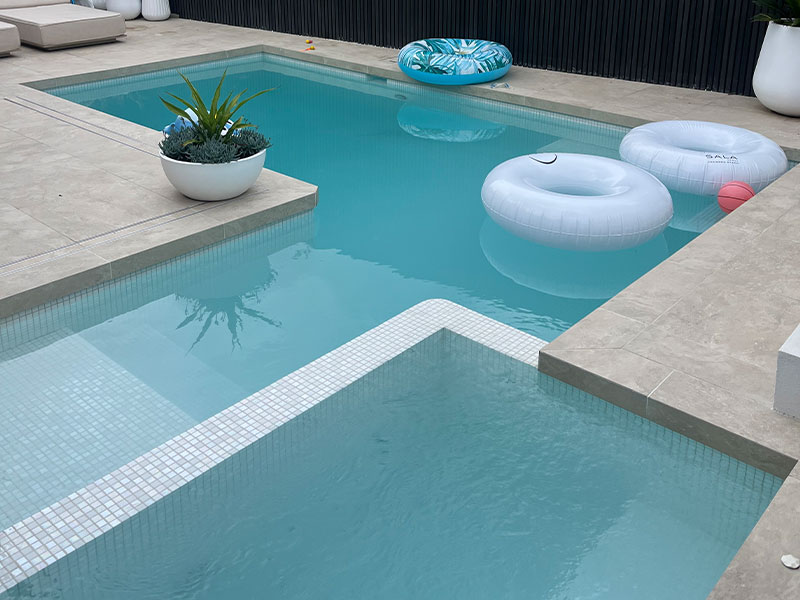
Concrete Pools: Offer virtually limitless freedom. Because concrete is poured and sprayed into bespoke steel formwork on-site, you can build any dimension, curve, or depth. You can integrate swim-out ledges, underwater barstools, Baja sun shelves, vanishing infinity edges, and custom-shaped adjoining spas that match your house boundaries down to the millimetre.
Fiberglass Pools: Are factory-manufactured from standard moulds. While there are dozens of shapes available, you are restricted to catalog dimensions. If your backyard has irregular angles, boundary easements, or established trees, fitting a fixed rectangular shell can compromise your garden flow.
2. Melbourne Soil Conditions & Ground Stability
Melbourne is renowned for its highly reactive basalt clay soils (particularly throughout the northern and western suburbs) and soft coastal sands along Bayside and the Mornington Peninsula. During long wet winters followed by dry 40°C summer heat, the ground swells and shrinks dramatically.
"A steel-reinforced shotcrete concrete pool can be engineered with deep concrete piers and rock anchors, locking the pool into bedrock and guaranteeing zero movement or shifting over decades."
Fiberglass shells are lightweight and flexible. While this allows some ground movement, fiberglass pools in areas with high water tables face the risk of hydrostatic lifting ("popping") or bowing walls if ground water pressures exceed the internal water weight when drained for maintenance.
3. Surface Finishes, Luxury & Aesthetics
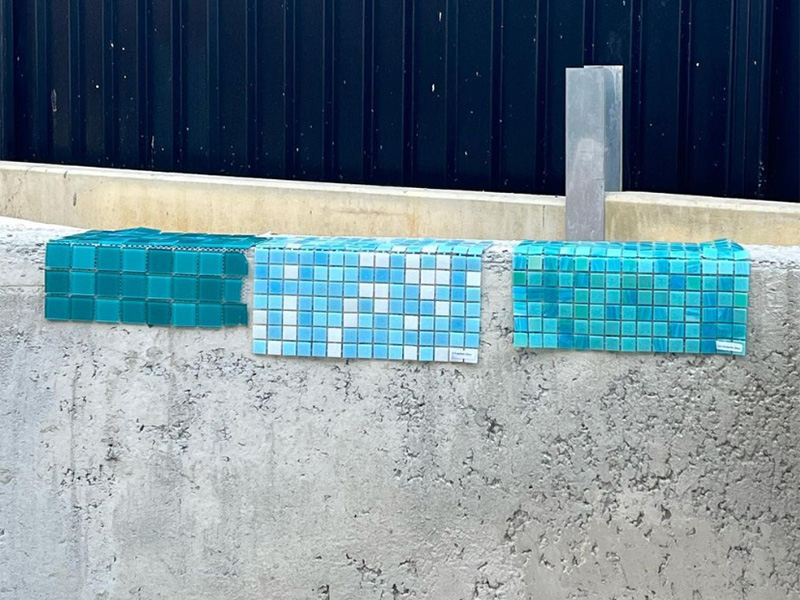
If your vision involves high-end architectural elegance, concrete is without peer. It allows luxury finishes such as fully imported Bisazza glass mosaics, natural quartz plaster, smooth pebblecrete, and precision-cut Victorian bluestone coping that sits flush with exterior paving.
Fiberglass features a smooth gelcoat finish that feels soft on feet and resists algae growth. However, gelcoat finishes can fade, oxidize, or develop osmotic blistering over a 15–20 year period, requiring specialized and expensive re-coating.
4. Detailed Side-by-Side Comparison
| Feature | Shotcrete Concrete Pool | Fiberglass Pool |
|---|---|---|
| Design Flexibility | 100% custom: any shape, size, depth, or integrated spa | Fixed catalog moulds and predetermined depths |
| Structural Lifespan | 50+ years with engineered steel shell | 25–30 years (gelcoat resurfacing required at ~15 yrs) |
| Melbourne Soil Performance | Engineered for reactive clays with micro-piles | Flexible shell, requires hydrostatic relief valves |
| Interior Finish Options | Glass mosaic, pebble, Quartzon, honed bluestone | Coloured gelcoat finish |
| Construction Timeline | 8 to 16 weeks bespoke master build | 3 to 6 weeks shell delivery & backfill |
| Inner-City Site Access | Concrete pumped through small side gates/alleys | Requires heavy crane hire over roofs/powerlines |
| Property Capital Value | Significantly higher capital appraisal in Melbourne | Moderate property value increase |
The Verdict: Which Should You Choose?
If you have tight crane access, a strictly compressed construction timeline, and a standard rectangular layout, fiberglass is a viable entry-level solution. However, if you are looking to create a true luxury outdoor sanctuary tailored precisely to your Melbourne home, maximizing property value, and built to last a lifetime, a bespoke concrete pool is the premier choice.
Need expert advice for your site?
Our experienced building consultants can assess your block, access, and budget to help you make the right choice.
Schedule a Site Assessment →